Archives

Category Archive for: 'Uncategorized'
CACAO

I had the opportunity this month to experience a cacao ceremony at Civana wellness resort. I was familiar with cacao as I drink it regularly in the colder months. I had not attended an actual ceremony before and was quite curious to see what it was all about. There were 7 of us plus our guide that attended the ceremony. We learned about the history of cacao and the medicinal benefits of cacao. We all enjoyed a mug of cacao together, intentionally. We meditated, we smelled the cup of cacao before drinking it, we embraced the warmth of the cacao when we took mindful sips, we placed intention into our cacao. As we sat in our circle together, we journaled our thoughts. I found cacao to be enjoyable, comforting, soft, smooth, and bright. My intention during this ceremony was to embrace openness. I was open to transitioning to a deeper, kinder version of myself, open to slowing down to experience the present, open to loving myself. I found myself feeling grounded, open, and present when we concluded our ceremony. It was truly beautiful and I was grateful to have had that experience.
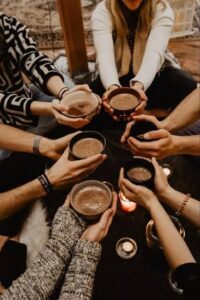
Cacao ceremonies date back thousands and thousands of years. Maya and Aztec civilizations looked to cacao use as sacred, “food of the gods”. Ceremonial cacao offers a blend of superfood nutrients, sustained mental energy, and intentional emotional grounding.
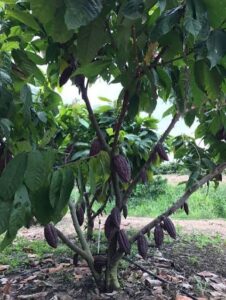

             

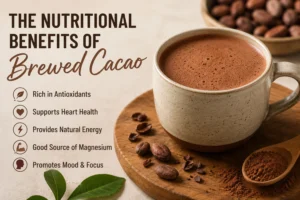
Cacao is plant based medicine. The cacao pods grow on trees in the Amazon, a warm, wet climate is needed for these trees to grow. Cacao is significantly less processed than cocoa, and rich with flavanols, polyphenols, and essential minerals. The primary stimulant in cacao is theobromine, which acts as a gentle cardiovascular stimulant allowing for smoother blood flow and sustained physical stamina without the crash like coffee. Cacao also contains neurotransmitters and amino acids that act as natural anti-depressants and mood stabilizers. The high concentration of flavanols directly impacts our blood vessel elasticity enhancing our cardiovascular health, while the polyphenols suppress systemic inflammation by inhibiting major cellular inflammatory pathways. Cacao, being rich in flavanols and polyphenols, helps fight oxidative stress. One more thing I would like to touch on is magnesium. Cacao is a great source for this essential mineral. Magnesium helps quiet an overactive nervous system, relaxes tight muscles, and promotes overall  physical grounding.
After reading my blog, I hope that you gathered useful information about the benefits of cacao and the many medicinal benefits from consuming it. Check out if there are any cacao ceremonies happening where you live, you will not regret attending one. I had a beautiful experience when I attended mine earlier this month.
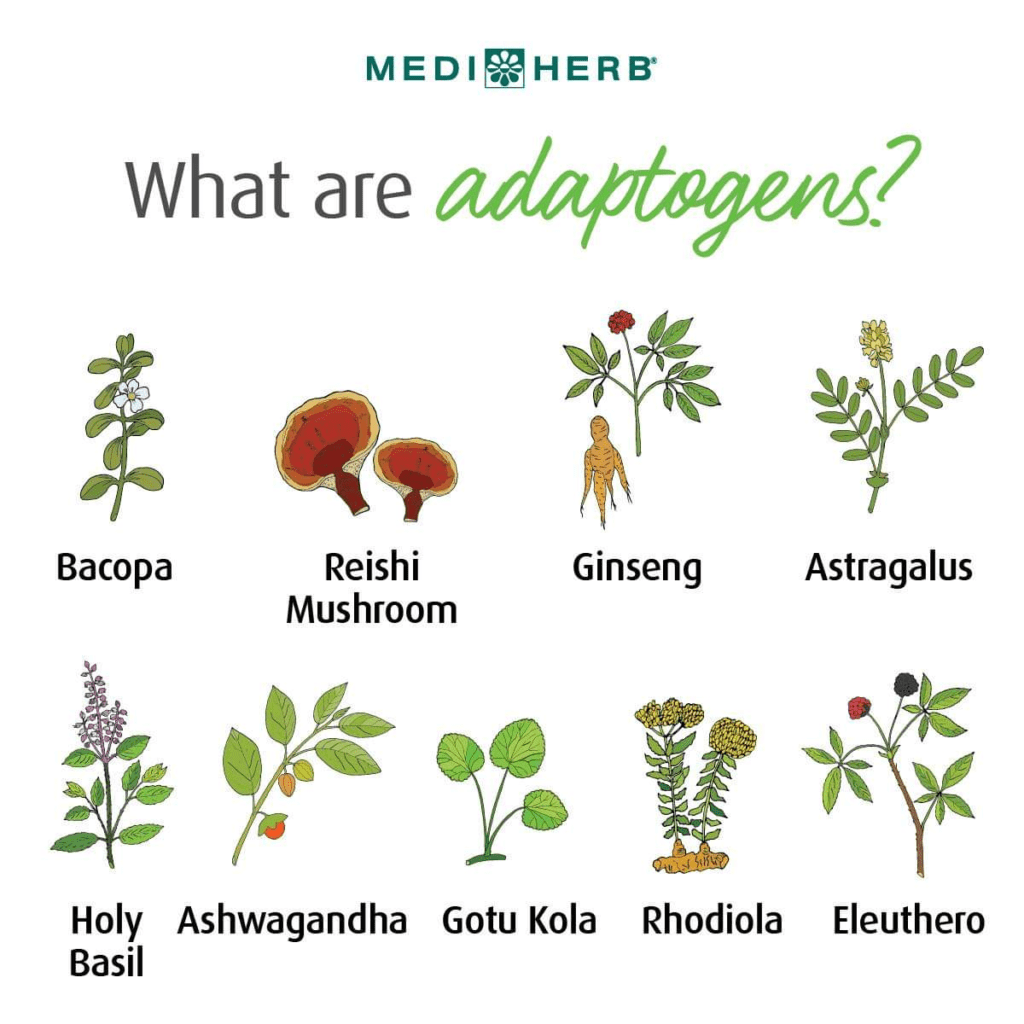
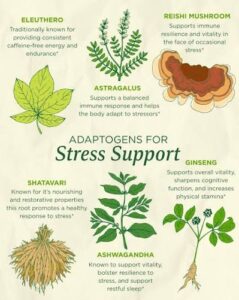
 

What are adaptogens?

Adaptogens seem to be a buzz word in the health world these past few years. What actually are adaptogens? They are specific plants and mushrooms that may help your body manage stress and restore balance. Some common specific plants are but not limited to ashwagandha, licorice root, tulsi/holy basil, medicinal mushrooms (lionsmane, chaga, cordyceps, reishi) rhondiola, shatavari, schisandra, astralagus, eleuthero, asian ginseng, maca root, and dang shen. These plants and herbs strengthen and balance your stress response system. They may be a buzzword currently, but adaptogens have been around since ancient times within Chinese Functional Medicine and Indian Aryuveda Medicine. They help the body adapt to physical and mental stresses.

Items that we consume that have adaptogens may support our nervous system. Adaptogens are a class of herbs that regenerate energy, not spike it. It supports our cortisol levels. You can use adaptogens in a variety of formats; mixing powders, capsules, teas, tinctures, soups, even skincare to name a few. Deciding which adaptogens you would like to try depends on what brought you to deciding to try them. Are you looking to relieve stress, increase your energy, have better sleep? Adaptogens tend to work better when you consume them daily. The theory is that they build the body’s immunity up to be able to adapt and control future stressful situations.

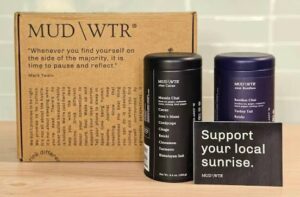
Adaptogen drinks are non-alcoholic beverages infused with specific herbs, roots, and/or functional mushrooms designed to help the body manage stress and support balance. There are many beverages containing adaptogens popping up these days; for mocktail mixers try Curious Elixirs, for hot drink/coffee replacements try Mudwtr or Rasa. Be mindful of any added sugars when shopping brands. Would love to know what you like if you already drink adaptogen drinks, drop a line!


Getting started — what should you try first?

If you’re new to adaptogen drinks, here’s a simple starting point based on your goal:

  • Stress & anxiety relief → Ashwagandha or Reishi-based drinks
  • Focus & mental clarity → Lion’s Mane powder or Schisandra Berry teas
  • Energy without caffeine crash → Rhodiola or Maca lattes
  • General wellness & immunity → Chaga or Tulsi teas

*Be sure to consult your physician prior to taking adaptogens if you are pregnant, nursing, or taking medication (make sure there is no negative interaction)*

CONSISTENCY

Recently, I was not feeling quite as in touch with myself. I was finding myself to have less motivation, feeling more irritable, and sleeping worse. Looking at my day to day routines I noticed I had fallen off some of my regular habits. Once I realized this, I started back on the path of consistency and within days I noticed a significant improvement in my overall well being.

Consistency is a term you have heard, and for the sake of this blog, I will focus on psychological consistency. To have growth and success in our lives, we must practice consistency.  It is important to be dedicated and focused on our goals. The phrase “consistency is key” is not an exaggeration. It is truly one of the most important factors when determining long term success.


Consistency is about doing something regularly, regardless of external factors or challenges. When we are consistent with our actions, our results will grow. It’s the act of showing up and putting in the effort steadily over time, even when results are not immediate. I notice myself finding this to be true through the simple act of stretching for example. I start off small with a few stretches for only a few minutes in the beginning. Then as I become accustomed to including stretching into my daily schedule, it becomes routine. I also notice that my flexibility is improving, and my aches and pains are less. These results continue to encourage me to stay on course. This is true when you begin strength training. You may start off by lifting light weights, then the following month after focusing on weight training weekly, you will see that you are lifting heavier weights. I find the same to be true with consistent meditation practices and gratitude journaling. I show up for myself daily to engage in these activities, and it pays off tenfold. I am more patient, I am less reactive, I am grateful even when there is a road bump in my day. I owe this to my daily practice of meditation and gratitude journaling. I did not notice the effects in the beginning when I started these activities, but once I became consistent with my practice, I saw the results, then realized these were now non-negotiables. My nervous system thrives when I incorporate these items into my daily life.


It is important for me to stick to my daily non-negotiables to stay on track with my health goals. Here are some of my non-negotiables.

*drinking water upon rising with my phytase and seed pro/pre biotics

*meditation 5-10 minutes

*gratitude journaling 5 minutes

*yoga 10-30 minutes

*spending time in nature

*protein with every meal

*cardio or lifting 20-45 minutes daily

*follow a paleo nutrition plan

* stop eating by 8pm

*aim for 7-8 hours of sleep

What are your daily non-negotiables?

If you find yourself looking to explore this more with an accountability partner, reach out to me  for a free discovery call! I am happy to chat about your goals and how to customize a health plan and how we will reach them.

WHAT DO YOUR MORNINGS LOOK LIKE

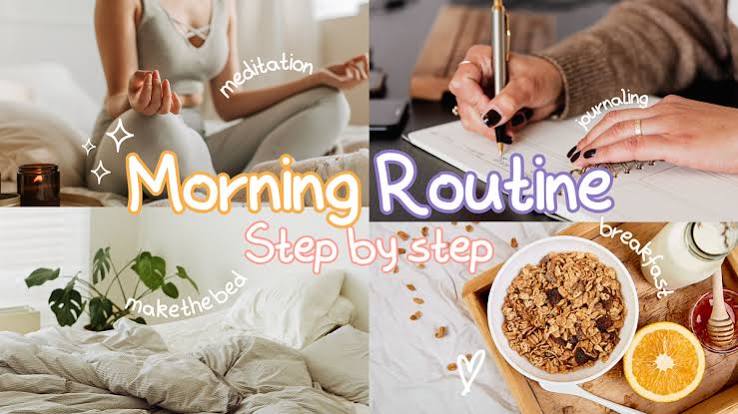
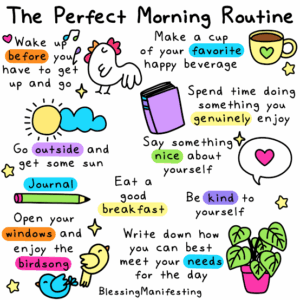
Morning routines are helpful to set us up for a day of success. They remove chaotic rushing around and implement mental focus, allowing you to control your day rather than your schedule controlling you. By transforming the start to your morning with intentional habits, you build immediate momentum that enhances your performance, emotional health, and overall well being.  I find myself practicing healthy, supportive habits consistently within my morning routine. Look to include habits for hydration, movement, and mindfulness to begin your day. I find it helpful to avoid screen time for the first hour of the day, such as texting, checking emails, and scrolling socials. I encourage you to think about what will best suit you and your needs to set you up for a successful and supportive day. What types of mindfulness call to you; meditation, journaling, and/or breath techniques. What types of movement sound good to you to start your day; walking, stretching, and/or yoga.

Some of the first things I do with my clients is work on establishing a customized morning routine that supports them. We talk about their goals, and the things they enjoy doing during their mornings. I find all clients enjoy their morning routine once they have established one consistently. This will take patience to see the positive results of your morning routine. Like most things, we do not typically see success over night, it takes time and consistency to see these positive results. Start off small, and continue to build onto your morning routine as you become comfortable with what you have established. Give yourself grace, not every morning will be perfect even when implementing  your routine, you are human and we are not meant to be perfect. See below an example of my personal morning routine. I would love to hear what you love to include in your morning routine!


MY MORNING ROUTINE

personal hygiene

big glass of water along with my pre/probiotics & phytase

meditation (5-10 minutes)

gratitude journaling

yoga (10-20 minutes)

matcha with collagen peptides

vitamin D3 from the sun with a morning dog walk

high protein breakfast with veggies and berries

BACKYARD CHICKENS

This morning after I awoke and greeted the day, I went out to see our chickens. This is a daily early morning chore on the Pharm; opening up the chicken coop, letting the birds out, feeding them and making sure all went well over night. Some people may think that this daily early morning chore is a pain, but when I was out there this morning I was reminded about all the joy these feathered friends bring us. I love watching them waddle and peck around, hearing the roosters crow, and let us not forget the fabulous, colorful, delicious eggs the hens produce.

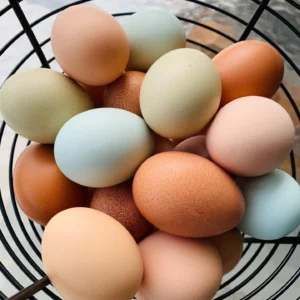
Not only are their eggs beautiful to look at, blue, green, tan, dark brown, white, but the deep, inner bright orange yolk is unbelievable. These eggs not only look fabulous, they also taste fabulous! We were traveling last month and when I had eggs for breakfast I was reminded of what conventional, store bought eggs are like;  light yellow to white yolk, very little taste, you could say I was disappointed that morning forgetting that all eggs are not like our chicken eggs. Hens with access to fresh grass and pasture tend to produce eggs with more vibrant yolk colors. That’s because these hens generally have a more varied diet with sources of protein from bugs and carotenoids from plants.

These days you do not need to live on a farm to raise your own chicken to eat farm fresh chicken eggs. Many neighborhoods allow residents to have a set number of hens in their backyard. If raising your own chickens is not for you, there are many farmers markets available most summer months that will have eggs available. You may also be lucky enough to have a local farm stand nearby that will sell farm fresh chicken eggs along with fresh vegetables, be sure to pick some up! Many of these spots will say their eggs are unwashed, we do the same with the ones we sell from our chickens, you will find that this is common in most parts of the world besides the USA. This is due to the fact that when eggs are left unwashed the egg has a protective layer called a bloom, that bloom preserves the freshness of the eggs naturally for a a couple of weeks at room temperature, and up to three months in the fridge. This invisible shield, the bloom, seals the porous shell preventing bacteria like Salmonella and air from entering the egg. Because of this natural defense, unwashed eggs stay fresh on the counter for a couple of weeks without spoiling. If you are unsure if a fresh egg is still good, place it in a bowl of water; if the egg sinks to the bottom, it is fresh; if the egg floats, it has taken in too much air and should be discarded.

This quote pretty much sums up my blog, “The best tasting eggs come from happy hens that get to forage free-range on grass, bugs, and vegetable scraps,” says F&W senior food editor Breana Killeen, who raises egg-laying hens at Killeen Crossroads Farm in Shelburne, Vermont. Look into seeing if you can raise chickens in your backyard or grab some farm fresh eggs from a local farmers market, enjoy!

Red lights and Infrared saunas – Is one better than the other?

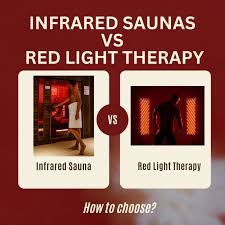
Red light therapy and infrared sauna are terms that many of us may have heard thrown around these days. Maybe you have had the opportunity to try one or the other. I started using these modalities regularly almost two years ago. They are both wonderful non-invasive wellness therapies that support our overall health. In answer to my question, is one better than the other, no, I believe they are both good for you for similar and different reasons. I enjoy using both therapies to decrease inflammation. Read on to learn more about my own experiences with each therapy.

Red light is generally used through small, medium, and large LED panels. They can be body length hung from a wall, set on a rolling stand, and also can be used on a table top directed at your face. Some companies also sell masks that are placed directly on your face. Red light may support skin health, muscle recovery, and wound healing. It can reduce inflammation, improve circulation, and support our joints. Red light stimulates our mitochondria, our powerhouse, allowing us to have more energy throughout the day along with enhancing cellular function and repair. In regards to skin health, red light stimulates collagen production; reducing fine lines and wrinkles, sun spots, acne, and even helps with conditions like psoriasis and eczema. I do use excellent skin products for my daily skin routine and have been asked by a few people recently at the age of 45, do I get Botox? I never have gotten Botox, and I can bet you that red light therapy has been assisting with my youthful appearance. Red light therapy sessions are quick, 15 minutes is all you need. I prefer using large panels that face both my front and back side to be efficient. There are many brands out there that are effective, I personally like the brand platinum led therapy lights.


Infrared saunas may use all three wavelengths near, mid, and far, when used all at once it is considered full spectrum. The near infrared wave is similar to the red light, 600-850 nm . Infrared saunas are more efficient than traditional saunas. Infrared saunas heat the body directly using infrared light waves, rather than warming the surrounding air like traditional saunas. Near, mid, and far infrared light waves that may be used in your session depending on the type of sauna you use. This allows infrared saunas to raise core body temperature more effectively at lower temperatures. Infrared saunas typically operate between 110°F and 140°F, whereas traditional saunas range from 150°F to 190°F. Traditional saunas heat the air, which then warms the body’s surface, while infrared saunas penetrate deeper into tissues, promoting perspiration and potential health benefits at more comfortable temperatures. Many people are able to stay in an infrared sauna longer than a traditional due to the air not being heated. The activation of heat shock proteins within your body helps repair damaged cells, reduce inflammation, and enhance overall cellular function. Both saunas a are heating up our core and allowing for detoxification via sweating. Toxins such as environmental pollutants, heavy metals, excess stress hormones are released through both sauna sessions. Saunas improve circulation and cardiovascular health, relieve pain and inflammation, boost energy and bodily defenses, and maintain the appearance of skin health.


I personally love how I feel during and after an infrared sauna session. I find it to be relaxing during the experience, and when practiced consistently I notice my muscles and joints feel better afterwards. My nervous system feels regulated after doing an infrared sauna session. Infrared saunas have been shown to reduce elevated cortisol levels. Cortisol is the body’s primary stress hormone. Also, you may find your sleep quality to improve. A good thing to note, not all infrared saunas are created equal. It is important to do your research and shop products that are third party tested. The last thing you want is to breathe in toxic glues or wood stains during your detox session. We recently purchased the Mpulse infrared sauna from Sunlighten.


In conclusion, my overall wellness has improved from both of these therapies. I highly recommend for athletes, those suffering from an auto immune disease, looking to decrease overall stress levels/cortisol, or simply wanting to increase personal longevity and have a youthful appearance.


WHEN NATURE IS CALLING….

Nature is beautiful, powerful, and plentiful. Enamored with the beauty of Colorado, I moved there in 2004. I was excited to camp, hike, and ski in those glorious Rocky Mountains. I had all sorts of fun adventuring around the state, meeting new friends, and trying new things. The mountains brought me joy and happiness, “how lucky I am” would be a motto I thought of often for many years in Boulder Colorado.

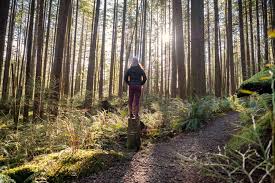
As the years went on, I found myself becoming busier with domestic chores, a 9-5 job, juggling relationships, and finding balance between all the things. Getting outside and enjoying the same activities I once had were not always available. Recently, I was having a rough start to my day that I could not snap out of, so I decided to take a drive into the mountains. I went on a walk along a rushing creek for a couple of hours, forest bathing. The transformation I felt within my body, my soul was incredible. Being in touch with nature, the sounds, the smells, the peace was extremely supportive to regulating my nervous system. It was such a beautiful reminder to know that nature supports us all. This may be in the form of having fun and enjoying outdoor activities, and it also may show up in a quieter way.

Forest bathing is a Japanese practice coined in the 1980’s. This is not just a “hike”, it is a mindful immersion in nature using all five senses to connect ourselves with the natural world. Practicing for even twenty minutes may lower our cortisol levels, our stress hormones. Forest bathing is also linked to reducing symptoms of anxiety, depression, and fatigue, while increasing focus and strength. It is truly incredible the ability we have to heal and to regulate our bodies when we submerge ourselves into nature in a mindful way.

COMMUNITY IS MEDICINE

I recently taught an interactive nutritional food workshop in my town of Lyons, what a great time we all had together! I loved how this workshop brought members of the community together. We spent the evening cooking delicious recipes focusing on using anti-inflammatory foods, creating meals that nourish our bodies and minds. There was chatting, laughter, and connection during our time spent together. After we completed our cooking, we all sat down and shared a meal together. This interaction we all had with one another filled me up inside with gratitude and happiness. I was reminded how wonderful social interaction can be even within our own community.

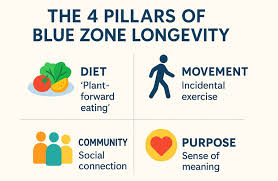
You may have heard of the blue zone regions. These are specific global regions where humans live exceptionally long, healthy lives, often exceeding 100 years, called centenarians. There are a number of common traits that these people share throughout the blue zone regions. One trait I would like to focus on in this blog is strong social connections. Many of these regions are smaller towns that allow the people of those communities to engage with one another. They walk most places vs. driving in cars, they share communal meals, they take care of their elders, and put their family first. These interactions not only support a feeling of having purpose and feeling loved, but also help people to maintain their thinking skills and cognitive abilities.

For the past number of years I have heard and used the terms “food is medicine” and “movement is medicine”. I would also like to offer the concept that “community is medicine”. Social isolation can lead to numerous health deficits in our lives. Human beings are wired for connection. From an evolutionary perspective, being part of a group increased our chances of survival. Fast forward thousands of years and our need for belonging hasn’t changed. Putting an emphasis on building meaningful bonds with those around you can help:

  • Lower your risk of chronic disease like heart disease, dementia, high blood pressure, and diabetes.
  • Reduce the risk of mental illness and boost resilience in times of stress
  • Strengthen your immune system, protecting you from serious disease
  • Strengthen cognitive function, including your memory and critical thinking skills
  • Regulate your levels of cortisol (the stress hormone) and decrease the resulting inflammation in the body
  • Improve your sleep

Beyond the mental, emotional, and physical benefits of social connection, strong relationships also encourage healthy behaviors through accountability and community. For example, you’re more likely to go on a walk or take a workout class if a friend joins you. You’re also more likely to schedule a doctor’s appointment if someone checks in to remind you. Simply put: the quality of our relationships can influence how long and how well we live.


EMBRACE THE DARKNESS DURING THE WINTER SEASON

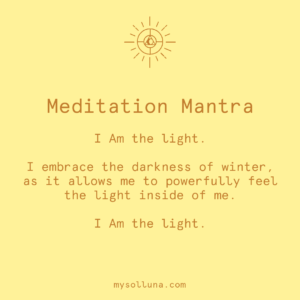
For us in the northern hemisphere we are entering our winter season. This brings shorter days of daylight, colder temperatures, outdoor gardening ends, and many animals will hibernate during this season. It is a time of year where the natural world slows down and goes dormant. The winter season is an invitation for us to pause, get more sleep, conserve energy, and nestle into our homes. This period of stillness may be considered a mini-hibernation for humans, a time for us to settle into physical and mental rejuvenation. It is important for us to embrace this time, tap into our para sympathetic nervous system and relax. We use this time during winter to recharge and restore, to support us to grow in the upcoming spring season. Be kind to yourself and allow your body and mind to rest, take the days a little slower. This is a time of opportunity to travel inward for deep reflection, goal setting, and personal growth. These sort of things tend to be overlooked in the warmer months when we are busy doing all the things. This is a great time to process emotions, let go of baggage, and gain self-awareness. I enjoy the short, cozy winter days even more as every year goes by.

TIPS ON HOW TO EMBRACE THE DARKNESS

Shift your mindset

Create cozy rituals

Prioritize rest

Yoga and breathwork

Engage in creative activities inside

Enjoy the outdoors mindfully

Volunteer in your community


Activities and rituals that I personally love to incorporate in my days:

a cup of tea with a good book

meditation and breathwork in an inviting, safe space

epsom salt and cbd baths by candlelight

journaling

enjoy a fire in our home

winter walks

skiing, snowshoeing, sledding , ice skating

puzzles, cards, and board games

crafting

cooking and/or baking nourishing meals and treats

incorporate social engagement via phone calls and zoom, invite a friend over to bake/cook with or play a game


Journaling Gratitude Daily

At the beginning of 2025, I set an intention for myself, daily gratitude journaling. I was wanting to become more present and grateful throughout my days as time seems to be flying by these days. It seems that as we get older, time goes by quicker, and I am finding this to be true. Gratitude journaling has allowed me to tap in to being more mindful, improving my self awareness. Daily gratitude journaling has been a wonderful tool to keep drawing me back to the present. It allows me to reflect upon my day and note what and whom I appreciated, including myself. I had not been thanking myself and appreciating my own body in ways that were supportive for me to grow. We tend to take many of the simple things in life for granted, I am a culprit of this, though journaling gratitude has given me the opportunity to be more mindful. A gratitude practice trains the brain to be more in tune with experiencing gratitude.

When I write in my journal each day, it ALWAYS brings a smile to my face and fills me up with happiness. Even on days where I feel down in the dumps, taking a few moments to acknowledge the small things in life that I am grateful for always changes my tune. I am grateful I woke up today. I am grateful for my breath. I am grateful to have a roof over my head. I am grateful for my family and friends. I am grateful for my animals. I am grateful for my body and the ability to move it daily. I am grateful for my health. These things that I listed we tend to take for granted and should be recognized as they really are essential for living a happy life. I have found that there is no specific time that is better than another to journal. After I have written in my journal, I feel lighter and happier, ready to take on my day with optimism and love, or it sets me up to have a deep, restful sleep at the end of my day. I highly recommend you trying out gratitude journaling – it’s free, takes only a few minutes, and the positive benefits are numerous!

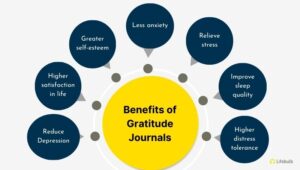
Research has shown that there are many mental, emotional, and physical benefits to gratitude journaling. Boosting mood and happiness, reducing stress and anxiety, and improving self awareness are some of the benefits you can expect along with improved sleep, lowering blood pressure, and reducing inflammation when you journal daily. Daily gratitude journaling is a self care ritual that will help you positively grow mentally, emotionally, and physically.

HOW TO START JOURNALING GRATITUDE?

Purchase a journal that you will use for your daily entries, possibly a new pen that you enjoy writing with. If working on your phone or a computer sits better with you by all means do what feels best for you!

Find a quiet spot where you can take a few moments to write in your journal.

Ask yourself, “what am I grateful for today?” It can be as simple as a sunny day, a smile from a stranger, a great meal you enjoyed, a conversation with a friend, going for a walk – the simple joys we encounter daily that often go unnoticed. Focus on the positives.

Consistency is key, aim to write in your journal daily for a few minutes, morning or night or anytime in between. If daily sounds overwhelming, start with writing in your journal weekly and progress from there.

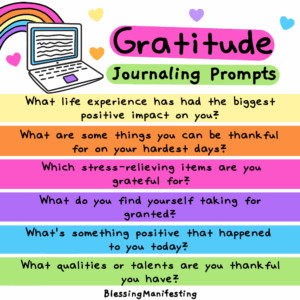
SAMPLE JOURNALING PROMPTS

  • What personal qualities and strengths are you grateful for?
  • Who is someone you love and why?
  • What made you smile or feel happy today?
  • What do you enjoy most about nature?
  • What was a recent challenge that you were able to overcome?
  • What brought you a sense of calm today?
  • What act of kindness did you do for yourself or for someone else?


1234